

LGBTQ+ Affirming Care
Therapy where you don't have to
explain yourself.
You've spent enough energy educating people — employers, family members, providers — about who you are. This space is different. Your identity is not a variable we work around. It is the context through which we understand everything else.
Stacy Reynolds, LMFT-Associate, LCDC-Intern · Supervised by Lisa Powell, Ph.D., LMFT-S
Alexzandria 'Ali' Adams, LPC-Associate · Supervised by Roy 'Benje' Morrison, M.Ed., LPC-S
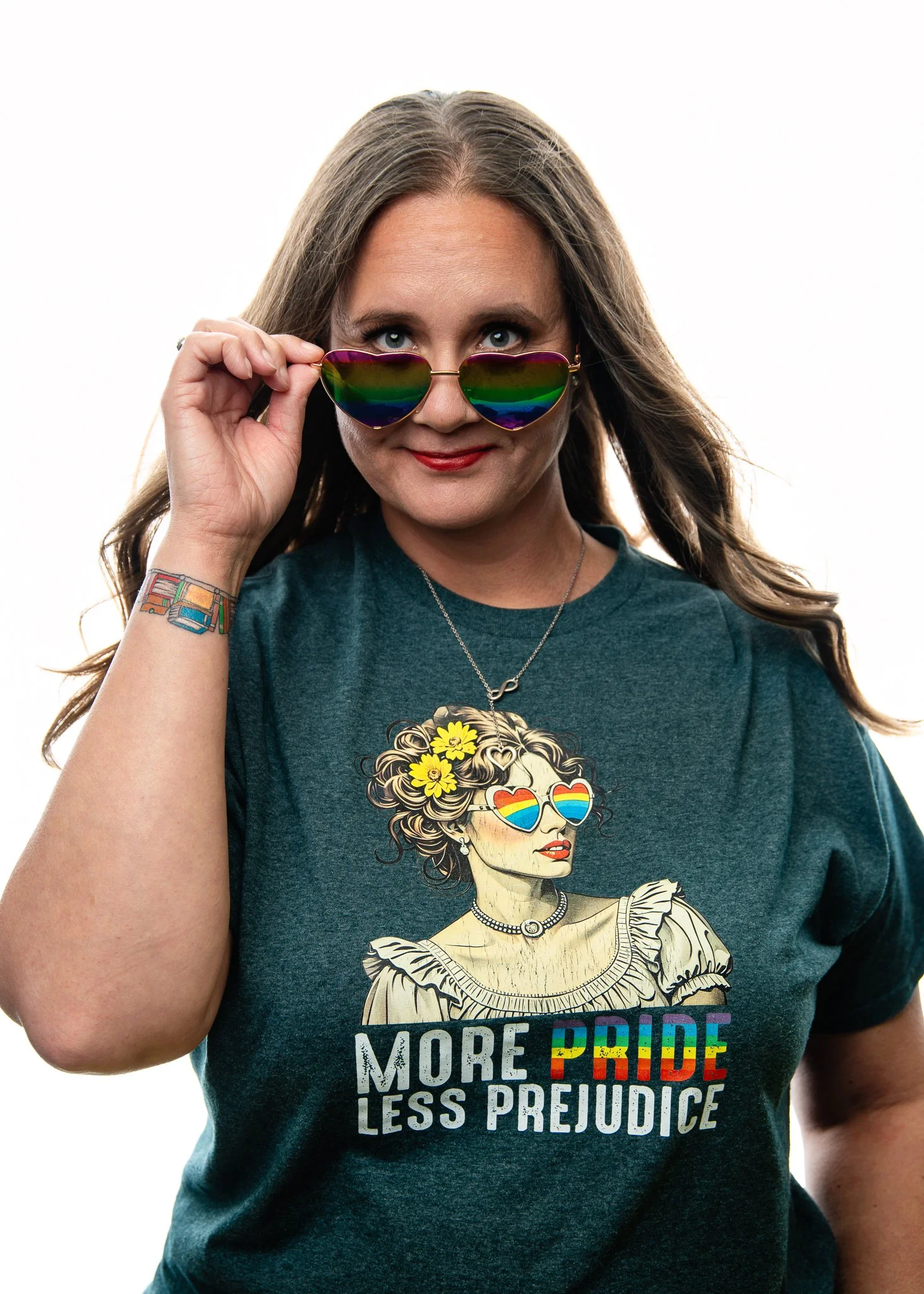
What Affirming Care Actually Means
More than a checkbox.
A foundation.
"LGBTQ+ affirming" is not a marketing phrase here. It means your therapist actively understands the unique stressors that come with navigating the world as a queer, trans, or non-binary person — and builds treatment around that reality, not in spite of it.
No Assumptions
We don't assume your pronouns, your relationship structure, your family dynamics, or what healing looks like for you. We ask. We listen. We follow your lead.
Culturally Competent
Your therapist understands minority stress, internalized stigma, identity-based trauma, and queer-specific relationship dynamics — without requiring you to explain them first.
Identity Is Never the Problem
Affirming care means your sexual orientation, gender identity, or relationship structure is never framed as something to be changed, managed, or minimized. It is honored.
Who We Serve
You belong here
exactly as you are.
Why It Matters
The data is clear.
The need is real.
LGBTQ+ individuals face disproportionate mental health challenges — not because of who they are, but because of the environments and systems they navigate. A therapist who understands that difference changes outcomes.
— NAMI / SAMHSA
— Williams Institute, 2019
— APA, 2021

A Personal Commitment
This work isn't
a policy for me.
I approach LGBTQ+ affirming therapy from a foundation of research, advocacy, and deep personal conviction. My doctoral research focuses on intimate partner violence within queer relationships — a population that is historically underserved and frequently left out of mainstream mental health frameworks that weren't designed with them in mind.
In this room, your identity is not a complication. It is context. It is the lens through which we understand your story, your strengths, and the specific pressures that have shaped your experience.
You won't spend our sessions educating me. You won't have to brace yourself for microaggressions or unwanted commentary on your relationships or your life. You can just show up.
— Stacy Reynolds, LMFT-Associate, LCDC-Intern
What Brings People Here
You don't need
a "good enough" reason.
Some people come in crisis. Others come quietly carrying something they've never said out loud. Both are welcome here.
Your Therapists
Two affirming clinicians.
One consistent commitment.

Founder of Brain & Heart Healing, Stacy brings doctoral-level research on queer intimate partner violence, trauma-informed practice, and over 25 evidence-based modalities to every session. Her work is anti-oppressive, identity-affirming, and grounded in both neuroscience and relational healing.

Ali brings a trauma-informed, collaborative approach to therapy with a specialization in foster care, family dynamics, and emotional regulation. She works with children (ages 8+), adolescents, and adults, and is committed to meeting every client in a space of dignity and non-judgment.
Common Questions
We've heard these before.
Ask anyway.
Do I have to explain what being trans or non-binary means?
No. You should never have to spend your therapy session educating your therapist on basic identity concepts. We come prepared. Your time in session is for your healing, not our education.
I'm not "out" to everyone. Is that okay?
Absolutely. Your disclosure decisions are entirely yours. Confidentiality applies here as with any clinical relationship, and we will never push you to come out to anyone on any timeline that isn't your own.
Can same-sex couples come for couples therapy?
Yes. We work with couples of all genders, orientations, and relationship structures. Couples therapy at Brain & Heart Healing is fully inclusive — we use the Gottman Method and Emotionally Focused Therapy, both of which are research-validated for same-sex and queer partnerships.
I was referred here by the court. Will my identity be an issue?
Never. Court-ordered clients receive the same affirming, non-judgmental care as any other client. We understand that many LGBTQ+ individuals have had negative or unsafe experiences within the legal system, and we hold space for that without judgment.
What are your fees?
Initial assessment: $200. Subsequent sessions: $150. A sliding scale may be available based on financial need — complete the Financial Assistance Screening to learn more.
Ready When You Are
You deserve care that
sees all of you.
You don't have to have the right words or a clear plan. You don't have to be at rock bottom. You just have to be ready to show up — and we will meet you there.